✨ This article was AI edited. Editorial responsibility: CoolestHoodies.com.
Produced with AI. This article was artificially generated. Editorial responsibility: CoolestHoodies.com.
How often do you wash hoodies? You should wash hoodies every 5 to 6 wears under normal casual use, or after 1 to 2 wears if worn directly against the skin or during intense physical activity. Frequent laundering accelerates fleece pilling, fades dye pigments, and degrades ribbing elasticity, so spot-cleaning and airing out between wears is recommended.
The Science of Laundering Frequency: Balancing Hygiene and Fabric Lifespan
Unlike base layers like undershirts, socks, and athletic underwear that sit in direct, continuous contact with high-perspiration apocrine glands, hooded sweatshirts are engineered as secondary thermal barriers (mid-layers or outer layers). In standard daily environments, a hoodie collects relatively low amounts of biological sebum and skin epithelial flakes, allowing for significantly longer wearing intervals between laundry cycles.
Every trip through a domestic washing machine subjects textiles to two distinct forms of physical degradation: chemical breakdown and mechanical abrasion. Detergent surfactants emulsify natural fiber lubricants, while the mechanical agitation of the washing drum causes surface yarns to shear and fracture. In cotton fleece and French terry garments, over-washing is the primary root cause of hard, rough interiors, faded color saturation, and premature seam unraveling.
Understanding when a hoodie genuinely requires deep aquatic cleansing versus light surface maintenance will extend the functional lifespan of your wardrobe by years.
Laundering Intervals by Activity Level and Wear Type
Determining the ideal washing schedule depends on three baseline variables: layer positioning (base vs. outer), ambient environmental exposure, and physical exertion level:
| Wear Scenario | Recommended Washing Frequency | Primary Contaminant | Maintenance Between Washes |
|---|---|---|---|
| Layered Over a T-Shirt (Indoor / Office) | Every 5 to 7 wears | Ambient dust, minimal body heat | Hang in ventilated room on broad hanger |
| Direct Skin Contact (No Undershirt) | Every 1 to 2 wears | Sebum, sweat, dead skin cells | Immediate wash to prevent armpit odor buildup |
| Workout / Active Sportswear | After every single wear (1 wear) | Lactic acid, concentrated bacteria | Wash immediately; never leave balled in gym bag |
| Outerwear / Jacket Replacement | Every 8 to 10 wears (or monthly) | Outdoor pollutants, road grime | Brush off dry dirt; spot-clean exterior spots |
| Lounge / Sleepwear | Every 3 to 4 wears | Bedding friction, night perspiration | Shake out and air-dry across a drying rack |
Why Over-Washing Destroys Sweatshirt Quality
Sweatshirt manufacturers and textile engineers caution against excessive laundering for several technical reasons:
- Fleece Matting and Roughness: The luxuriously soft interior of a new hoodie is created through a mechanical brushing process that teasels cotton-polyester loops into a raised, fuzzy pile. Water immersion combined with detergent salts causes these fine fibril strands to tangle into dense, coarse clumps—a process known as matting. Once matted, fleece loses up to 60% of its thermal insulation capacity.
- Pilling and Fiber Shear: During the spin and wash cycles, loose outer fiber ends twist together under rotational friction, forming unsightly surface balls (pills). While a fabric shaver can remove pills, each shaving pass permanently reduces the fabric’s GSM (grams per square meter) weight and tensile strength.
- Elastane Ribbing Degradation: The cuffs and hem ribbing of quality hoodies contain fine synthetic elastic filaments. Exposure to warm wash water, alkaline detergents, and heat causes elastane to snap microscopically, leaving you with limp, stretched-out wrists and a wavy hem.
- Pigment Fading and Bleed: Modern garment dyes—especially reactive dyes on 100% cotton—gradually dissociate from cellulose fibers in water. Washing your black or dark earth-tone hoodies weekly will turn deep obsidian shades into dull charcoal within six months.
Step-by-Step Methodology: How to Wash a Hoodie Correctly
When your hoodie finally reaches its designated wear limit, executing a gentle, protective wash cycle ensures it emerges immaculate without sacrificing softness:
Step 1: Pre-Wash Preparation
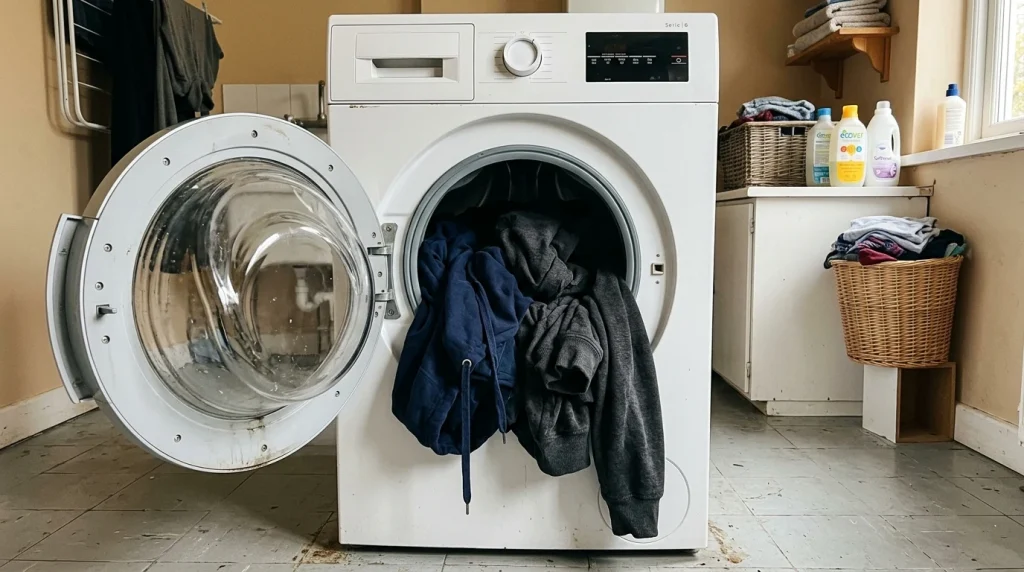
Empty all kangaroo pockets completely. Turn the entire hoodie inside out; this simple action shields the visible outer face from friction against other garments and machine drum walls. Zip up all metal or plastic zippers to prevent jagged teeth from snagging and pulling looped knit yarns. Tie the hood drawstrings in a loose bow knot to keep them from pulling through the collar channel during agitation.
Step 2: Water Temperature and Cycle Selection
Always set your washing machine to Cold Water (30°C / 85°F or below). Cold water prevents color bleeding, protects organic cotton fibers from thermal shock shrinkage, and preserves elastane stretch in cuffs. Select the Gentle or Delicate Cycle with a maximum spin speed of 800 RPM to minimize centrifugal crushing forces.
Step 3: Detergent and Chemical Rules
Use a mild liquid laundry detergent free of optical brighteners and bleach. Powdered detergents often fail to dissolve completely in cold water, leaving chalky white streaks on dark fleece. Never use commercial fabric softeners on hoodies. Fabric softeners coat cotton and fleece fibers in a hydrophobic silicone wax film that traps odors, diminishes breathability, and ruins natural moisture-wicking properties.
Step 4: The Drying Protocol (Air Dry vs. Machine Dry)
The single most destructive appliance in garment care is the domestic tumble dryer. High-heat tumble drying cooks cotton fibers, shrinks garments by 5% to 10%, and fries synthetic fleece. Instead, lay your hoodie flat on a horizontal mesh drying rack over a clean, dry towel. Flip the garment after 6 to 8 hours to ensure complete drying across both sides, including thick seams and pocket linings.
Spot-Cleaning and Deodorizing: The “Wash Less” Toolkit
You can effortlessly extend the wear interval of your favorite hoodies from 3 wears to 8 wears by utilizing targeted spot maintenance techniques:
1. Food and Beverage Spot Removal
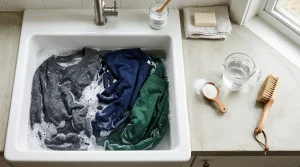
For small oil, sauce, or coffee drips on the chest or sleeves, treat the isolated stain immediately rather than soaking the entire garment. Apply a small droplet of clear dishwashing soap (which excels at breaking down grease lipids) directly onto the spot. Dab gently with a damp microfiber cloth from the outer edge inward to avoid spreading the stain. Rinse the treated area under cold running tap water and pat dry.
2. The Vodka Deodorizing Spritz
To eliminate faint underarm odors or campfire and cooking smoke without laundering, spray the garment with a 50/50 mixture of unflavored, high-proof vodka and distilled water using a fine misting bottle. As the alcohol rapidly evaporates into the air, it kills odor-causing bacteria and neutralizes aromatic volatile organic compounds without leaving any residual scent.
3. Steam Refreshing
Hanging your hoodie in a steamy bathroom while taking a hot shower—or passing a handheld garment steamer lightly across the exterior—relaxes wrinkles, plumps up crushed fibers, and deodorizes the textile through high-temperature vapor penetration.
Frequently Asked Questions About Washing Hoodies
What happens if I never wash my hoodie?
While over-washing causes mechanical wear, never washing a hoodie leads to hygiene and structural failure. Accumulated body oils oxidize into fabric pores, creating permanent yellowing and stubborn sour odors. Furthermore, embedded microscopic dirt particles act like tiny sandpaper grains, cutting through fiber strands when friction occurs during movement.
Should I wash brand new hoodies before wearing them?
Yes, washing a newly purchased hoodie once before wearing is strongly advised. Garments undergo chemical finishing processes during manufacturing and shipping, including sizing starches, synthetic dye fixatives, and anti-mildew treatments that can irritate sensitive skin. A gentle initial wash also rinses out loose lint from interior brushed fleece.
Can I wash a hoodie with jeans and towels?
Avoid washing hoodies with abrasive textiles like heavy denim jeans, work jackets, or rough terrycloth towels. Coarse fabrics and exposed metal rivets create severe surface friction that accelerates fabric pilling and causes snagging along delicate ribbing.
Get our latest guides, news, and insights highlighted in your Google Search & AI Overviews.