✨ This article was AI edited. Editorial responsibility: CoolestHoodies.com.
How to get stains out of sweatshirts? The universal rule for removing stains from cotton-polyester fleece sweatshirts is immediate triage using cold water and targeted chemical emulsifiers matched to the stain type. For oil and grease, apply concentrated surfactant liquid dish soap with baking soda; for protein stains like blood or sweat, soak in cold water with enzymatic detergent; and for tannin stains like coffee or wine, blot with distilled white vinegar and gentle oxygen bleach. Never apply hot water or run a stained sweatshirt through an electric dryer, as heat permanently bakes stains into the cellulose fiber core.
A high-quality sweatshirt is designed to be lived in, whether you are running morning errands, cooking dinner, working in the garage, or relaxing on the couch. Unfortunately, everyday life is filled with staining hazards: olive oil splatters, morning espresso drips, mustard drips, ink leaks, and stubborn collar sweat rings. Because sweatshirts are manufactured from highly absorbent looped French terry or brushed cotton-polyester fleece, liquid spills wick rapidly through the yarn, bonding with inner fibers in seconds.
Most people react to a spill by frantically scrubbing the spot with hot tap water and hand soap. This single mistake ruins more sweatshirts than the stain itself by driving the pigment deeper into the yarn twists and abrading delicate fleece surface fibers into a fuzzy, matted halo. Below is the scientific, textile-safe masterclass on removing fresh and set-in stains from any sweatshirt without fading its color or ruining its plush interior.
The Golden Rules of Sweatshirt Stain Triage
Before reaching for any cleaning solvent in your pantry or laundry room, memorize these four non-negotiable rules of fleece care:
- Blot, Never Scrub: Scrubbing or rubbing causes mechanical friction that fuzzes the knit surface and forces pigment particles deep into the core of the yarn. Always blot firmly with a clean white microfiber cloth or paper towel from the outside edges toward the center of the spill.
- Cold Water Exclusively: Hot or warm water denatures proteins (baking egg, blood, and dairy into the fabric) and accelerates chemical bonding between organic tannins and cotton cellulose. Use cold tap water (below 65°F / 18°C) for all initial rinses.
- Flush from the Reverse Side: Hold the stained sweatshirt inside out directly beneath a cold faucet. Running water through the back of the fabric flushes the foreign substance out of the fibers rather than pushing it deeper through the fleece layer.
- Inspect Before the Dryer: Electric dryers act as high-heat baking ovens. If a faint ghost of the stain remains after washing, tumble drying will oxidize and polymerize the stain permanently into the yarn. Always check the wet garment in natural daylight and air dry if any discoloration persists.
Targeted Stain Protocols: The Chemical Matching Guide
Different stains require fundamentally different molecular reactions. Applying vinegar to a protein stain can set it, while using basic soap on a tannin stain can darken it. Follow this targeted chemical matrix:
| Stain Category & Examples | Primary Chemical Agent | Step-by-Step Treatment Procedure | Crucial Warning |
|---|---|---|---|
| Lipids & Greases: Cooking oil, butter, pizza grease, motor oil, bacon fat | Concentrated dish soap (Dawn Blue) + Baking Soda | Sprinkle baking soda on stain to absorb free oil; leave 15 min. Brush off, apply 1 tsp dish soap, work gently into fibers with finger pads, let sit 30 min, rinse with cold water. | Never scrub with a stiff brush; it creates permanent pills on fleece. |
| Proteins: Blood, egg, dairy, meat juice, armpit sweat sebum | Enzymatic liquid detergent (Protease-based) | Submerge sweatshirt in cold water basin with 1 tbsp enzyme detergent. Agitate gently and soak for 45 to 60 minutes. Rinse thoroughly in cold water. | Zero Hot Water! Hot water immediately cooks protein molecules into permanent bonds. |
| Tannins & Organic Dyes: Coffee, tea, red wine, tomato sauce, berries | Distilled white vinegar + 3% Hydrogen Peroxide (lights) or Dish Soap (darks) | Flush with cold water from reverse. Mix 1 part white vinegar and 2 parts cold water. Blot stain thoroughly. On white fleece, add a drop of 3% hydrogen peroxide. Let sit 20 min, then wash. | Spot-test hydrogen peroxide on an interior seam first on dyed garments to test colorfastness. |
| Inks & Pigments: Ballpoint pen, marker, cosmetic foundation, lipstick | 70% Isopropyl Alcohol or Micellar Water | Place a clean towel inside the sweatshirt beneath the stain. Saturate a cotton ball with 70% isopropyl alcohol and press firmly onto the ink mark to transfer pigment to the towel. Repeat until clear. | Never rub vigorously; rubbing spreads ink pigments outward into a massive smudge. |
| Mud, Clay & Field Dirt: Baseball dirt, soccer turf, red clay | Dry brushing + Enzymatic Soak | Allow mud to dry completely. Scrape crust away with a dull butter knife. Vacuum or brush loose dry soil off before wetting. Soak in enzyme detergent water for 30 minutes. | Wetting wet mud spreads fine clay silt deep into fleece micro-loops. |
Color Care: Preserving Whites, Greys, and Dark Sweatshirts
Fleece fabrics react differently to stain removal agents depending on their underlying dye structure:
1. Heather Grey Sweatshirts
Heather grey is created by blending white cotton and black dyed polyester fibers together. If you apply chlorine bleach or aggressive spot treatments to heather grey, the bleach strips the black polyester filaments, leaving behind bright, permanent chalk-white blotches. Always use oxygen bleach (sodium percarbonate) or diluted vinegar on grey fleece, as detailed in our guide on how to get stains out of a grey hoodie.
2. Pure White Sweatshirts
White fleece handles optical brighteners and mild oxidizing agents well. A mixture of equal parts 3% hydrogen peroxide, baking soda, and blue dish soap forms a miracle stain paste. Apply the paste directly to yellowed underarms, coffee splashes, or collar grime, allow it to sit in natural sunlight for 1 hour, and wash as normal.
3. Pitch Black & Navy Sweatshirts
Dark dyed fleece is vulnerable to surface color fading. Never use hydrogen peroxide, lemon juice, or oxygen bleach in high concentrations on dark hoodies. Stick strictly to cold water flushes, Dawn dish soap, and enzyme detergents formulated specifically for dark colors.
The Deep Rescue Soak: Removing Old, Heat-Set Sweatshirt Stains
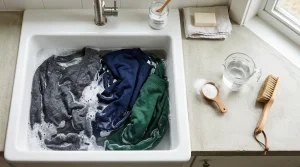
If you inherited a vintage sweatshirt with mystery yellow spots or dried a stained hoodie in the dryer by accident, all hope is not lost. The Overnight Active Oxygen Submersion Method breaks old polymerized stains down through chemical oxidation:
- Dissolve Oxygen Bleach in Warm Water: Measure 1 full scoop (approx. 2 tablespoons) of sodium percarbonate powder (such as OxiClean Versatile). Dissolve it in 2 cups of very hot water in a measuring cup until fully effervescent and transparent.
- Dilute in a Cool Water Basin: Pour the dissolved hot solution into a laundry tub filled with 2 to 3 gallons of cold water. This ensures active oxygen radicals are released while the bath temperature remains cool enough to protect cotton from shrinking.
- Submerge Completely: Push the entire sweatshirt underwater, gently massaging the fleece to release trapped air pockets. Weigh it down with a clean white ceramic plate if it floats.
- Soak for 6 to 12 Hours (Overnight): Allow the oxygen bubbling action to gently lift oxidized organic residues away from the cotton cellulose fibers overnight.
- Machine Wash on Delicate: Transfer directly from the soak basin into your washing machine without wringing. Run a regular cold wash cycle with your standard liquid detergent.
Post-Removal Laundering & Drying Protocol
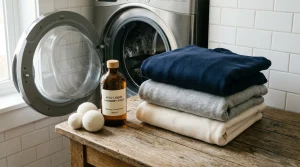
Once spot treatment or soaking is complete, launder the garment properly to remove both the stain particles and the cleaning surfactants:
- Turn Inside Out: Always invert the sweatshirt before washing to protect outer graphics and prevent friction pilling.
- Cold Delicate Cycle: Wash with similar weight knits (do not wash heavy hoodies with rough metal jeans or towels).
- Skip Fabric Softener: Liquid softeners coat fibers in silicone wax, locking lingering trace odors inside the fleece. Add 1/2 cup white vinegar to the rinse cycle instead.
- Air Dry Flat: Lay the damp sweatshirt flat on a clean drying rack. Never place it in the dryer until you have visually confirmed in direct daylight that 100% of the stain is eradicated.
For more comprehensive wardrobe care instructions, see our articles on how to get grease out of a sweatshirt, learn best practices for laundering cycles in how often should you wash hoodies, and master closet preservation in should you hang or fold hoodies.
Frequently Asked Questions
Can you use baking soda and vinegar together on a sweatshirt stain?
While the fizzing reaction looks impressive, mixing baking soda (a base) and white vinegar (an acid) together in equal parts simply produces saltwater and carbon dioxide gas, neutralizing their cleaning effectiveness. Instead, use them sequentially: apply baking soda with dish soap first to absorb grease and scrub gently, rinse thoroughly, and then use vinegar as an acidic rinse to lift mineral residues.
Does Dawn dish soap ruin the color of colored sweatshirts?
No, standard original Blue Dawn dish soap is pH-neutral and completely safe for colorfast dyed cotton and polyester fleece. However, do not leave concentrated Dawn on vibrant red, pastel, or vintage garments for more than 1 hour without rinsing, as prolonged surfactant contact can occasionally cause slight dye migration.
Why did my stain removal spot leave a dark water ring after drying?
A water ring occurs when detergent residues or dissolved dirt migrate outward to the perimeter of the damp area and dry in a concentrated ring. To prevent this, always feather the edges of the treated spot with a damp cloth, or wash the entire sweatshirt in the washing machine after spot-treating rather than allowing a small damp spot to dry alone.
Is it safe to use rubbing alcohol on printed graphic sweatshirts?
Keep rubbing alcohol away from screen-printed rubber, plastisol graphics, and vinyl heat-transfer decals. Isopropyl alcohol dissolves the binders and plasticizers in screen-print inks, causing decals to crack, peel, or smear across the fabric. Only apply alcohol to bare fleece areas.
Can hydrogen peroxide bleach colored sweatshirts?
A 3% household concentration of hydrogen peroxide is a mild, non-chlorine oxidizing agent that is generally color-safe on synthetic dyes, but it can lighten sensitive reactive cotton dyes (especially light blues, pastels, and heather tones). Always perform a 10-minute patch test on the inside hem or inner pocket lining before applying to the front of a colored sweatshirt.
Get our latest guides, news, and insights highlighted in your Google Search & AI Overviews.