✨ This article was AI edited. Editorial responsibility: CoolestHoodies.com.
Produced with AI. This article was artificially generated. Editorial responsibility: CoolestHoodies.com.
Discovering multiple mysterious spots across your chest, dark grease splatter on the kangaroo pocket, or stubborn yellowed rings around the collar and underarms can make even the highest-quality fleece look unwearable. Knowing how to get stains out of a sweatshirt—especially when those marks have already been through the wash or baked into the fibers by an electric dryer—requires understanding the chemical bonds holding stubborn pigments inside looped cotton and synthetic fleece.
Surface washing alone rarely eliminates old, oxidized residues. To rescue heavily stained sweatshirts without fading their vibrant colors or turning the brushed fleece scratchy, you need a systematic deep-soak and enzyme approach. Below is the master protocol for eliminating multi-spot stains, old washed-in spots, and deep collar discoloration.
The Chemistry of Set-In Sweatshirt Stains
Why do stains resist ordinary machine wash cycles?
- Thermal Polymerization: When a stained sweatshirt is placed in a heated tumble dryer, the intense heat (135°F to 160°F) polymerizes unsaturated fats and cooks organic proteins. The stain essentially bakes into a plastic-like film bonded directly to the polyester and cotton fibers.
- Detergent Scum and Mineral Traps: Washing in hard water causes calcium and magnesium ions to bind with laundry soap, forming a microscopic insoluble film that traps body sweat and sebum deep within the fleece loops. Over months, this buildup oxidizes into dingy yellow or grey halos.
- Cellulose Capillary Action: Natural cotton fibers feature an internal hollow cavity (the lumen) that draws dye particles deep inside through capillary action, where surface friction cannot reach them.
The 4-Step Deep Oxygen Soak Protocol (For Multiple & Dried Stains)
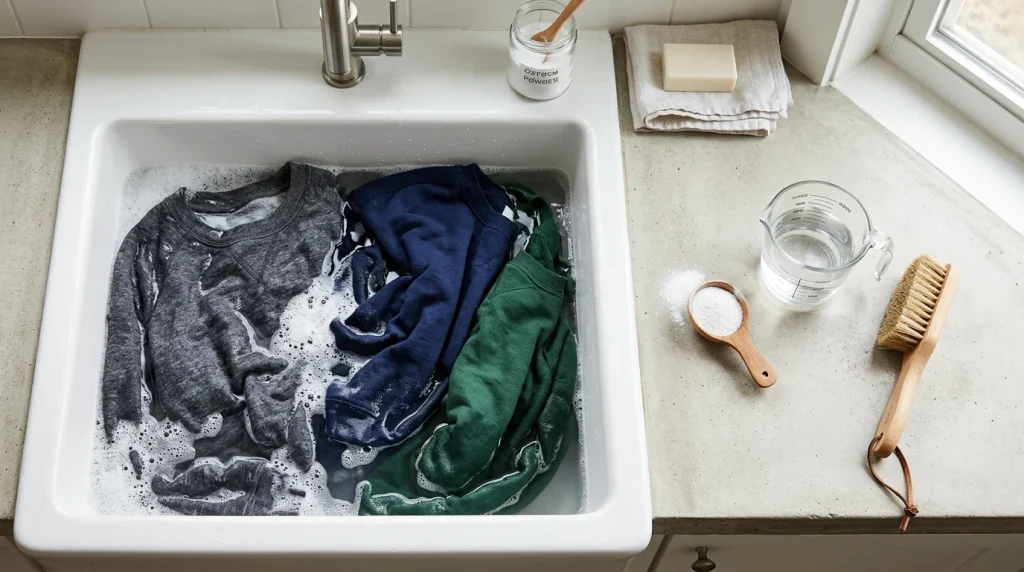
When dealing with a sweatshirt covered in multiple stains or an overall dingy appearance, spot-treating each tiny mark individually is ineffective. Instead, execute this full-garment restorative soak:
| Soak Stage | Chemical Ingredient | Temperature & Dwell Time | Mechanism of Action |
|---|---|---|---|
| 1. Solution Prep | 2 scoops (4 oz) Sodium Percarbonate (OxiClean / Oxygen Bleach) | Warm water (115°F to 125°F / 46°C to 52°C) | Heat releases active oxygen ions and washing soda (sodium carbonate) |
| 2. Enzyme Boost | 2 tablespoons high-efficiency liquid detergent (Tide or Persil) | Dissolve fully before submerging garment | Protease and amylase enzymes break protein and starch bonds |
| 3. Submersion | Weigh down with a clean white towel or plate | 4 to 8 hours (or overnight) | Continuous bubbling action oxidizes stain chromophores without dye fade |
| 4. Neutralization Wash | 1/2 cup distilled white vinegar in fabric softener dispenser | Cold gentle cycle | Mild acid neutralizes alkaline salts, softening fleece fibers |
Targeting Ring-Around-The-Collar and Underarm Yellowing
Necklines and underarms suffer from a dense combination of body sebum oils, sweat salts, and aluminum antiperspirant residues. Treat these specific zones with this concentrated triple-action paste:
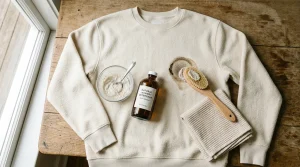
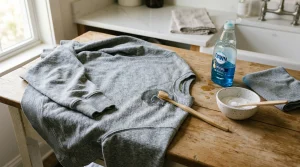
- Mix the Tri-Action Paste: Combine 3 tablespoons baking soda (mild physical abrasive), 1 tablespoon 3% hydrogen peroxide (color-safe oxidizing agent), and 1 tablespoon blue liquid dish soap (heavy-duty lipid degreaser) in a small bowl until it forms a creamy spreadable paste.
- Work into Ribbed Seams: Lay the sweatshirt flat with the collar spread wide. Using an old soft-bristled toothbrush, massage the paste deeply into the ribbing grooves and underarm seams.
- Dwell Window: Let the paste sit on the fabric for 45 to 60 minutes. As the hydrogen peroxide activates, it releases oxygen micro-bubbles that loosen hardened aluminum-sebum complexes.
- Rinse and Wash: Flush the collar under warm running water, then machine wash using your regular laundry cycle.
Specialty Spot Treatments: Ink, Mud, and Rust
Certain stubborn compounds require tailored chemical reagents outside of standard oxygen soaks:
- Ballpoint Pen Ink: Place a clean folded cloth beneath the ink mark inside the sweatshirt. Dab 70% or 91% isopropyl alcohol onto the spot with a cotton ball. The alcohol immediately dissolves the solvent base of the ink, bleeding it into the cloth below. Blot repeatedly until clear, then flush with cold water.
- Red Clay and Mud: Never wash wet mud with water immediately; wet washing turns particulate dirt into deep liquid mud slurry that dyes the fleece. Let the mud dry completely into a brittle crust, brush away as much dry dust as possible with a stiff brush, then pre-treat the residual soil with concentrated liquid detergent before washing.
- Rust and Metal Oxidation: Rust cannot be removed by oxygen bleach. Treat rust spots by sprinkling table salt over the mark, saturating it with fresh lemon juice, and laying the sweatshirt in direct sunlight for 1 to 2 hours. The natural oxalic acid in lemon juice safely converts ferric oxide into water-soluble iron complexes.
Colorfastness Guidelines Across Different Sweatshirt Colors
Different dye processes require calibrated chemical aggression to avoid stripping the garment’s primary color:
| Sweatshirt Color | Safe Stain Treatments | High-Risk Chemicals to Avoid |
|---|---|---|
| Solid White Fleece | Oxygen bleach, baking soda, 3% hydrogen peroxide, enzymatic soaks | Chlorine bleach (causes yellowing of synthetic fibers and destroys fleece) |
| Heather Grey Blends | Mild dish soap, vinegar rinses, diluted oxygen bleach (warm water only) | Prolonged peroxide exposure (can leave bleached light spots on blended heather) |
| Dark Dyes (Black, Navy) | Enzyme liquid detergents, cold water soaks, concentrated dish soap | Direct hydrogen peroxide paste, aggressive stiff-bristle brushing (causes faded wear marks) |
Frequently Asked Questions
Can I save a sweatshirt that has already been through the dryer with stains?
Yes. While dryer heat makes stain removal significantly harder, it is not permanent. The multi-hour warm oxygen bleach soak outlined above re-hydrates the polymerized lipid binder, allowing the surfactants to break the bond. You may need to repeat the soak twice for heavy, set-in automotive grease or dark barbecue sauce.
How do I remove stains without making the fleece scratchy?
Never use harsh chlorine bleach, which melts synthetic micro-loops. In addition, avoid commercial fabric softeners, which leave a silicone coating that actually locks stains into the fleece. Instead, add 1/2 cup of distilled white vinegar to the final rinse cycle to strip away alkaline mineral residue, naturally restoring cloud-like fleece softness.
What temperature ruins enzymes in laundry detergent?
Laundry enzymes (proteases, lipases, amylases) operate optimally between 85°F and 115°F (30°C to 45°C). Water temperatures exceeding 130°F (55°C) permanently denature (destroy) enzyme protein structures, rendering enzymatic pre-treatments completely ineffective.
Holistic Fabric Care and Garment Preservation
Tackling set-in stains restores years of comfortable wear to your sweatshirt rotation. For targeted instructions on treating fresh, single-incident spills, consult our emergency triage guide on how to get a stain out of a sweatshirt. For specialized lipid-dissolving protocols, see how to get grease out of a sweatshirt, and keep sensitive heather dyes pristine by reading how to get stains out of a grey hoodie. After cleaning, store your collection correctly by reviewing whether you should hang or fold hoodies.
Get our latest guides, news, and insights highlighted in your Google Search & AI Overviews.