✨ This article was AI edited. Editorial responsibility: CoolestHoodies.com.
Produced with AI. This article was artificially generated. Editorial responsibility: CoolestHoodies.com.
Grease and cooking oil create stubborn, dark circular spots on sweatshirts because lipid molecules bind tightly to porous cotton cellulose and synthetic polyester fibers. Unlike water-soluble food spills, oil does not dissolve in plain water—even hot water alone merely spreads the lipid film further into the fleece weave.
Removing cooking grease, butter, bicycle chain oil, or salad dressing from a fleece sweatshirt requires an aggressive surfactant to emulsify the lipids, paired with an absorbent carrier powder. Below is the tested protocol for eliminating both fresh splatters and stubborn, heat-set dried grease spots without discoloring your fabric.
Action Checklist by Stain Age
The chemical approach differs based on whether the oil stain is fresh or has already dried and set through a previous laundry cycle:
| Stain Condition | Primary Chemical Agent | Dwell Time | Success Rate |
|---|---|---|---|
| Fresh Spill (Under 2 hours) | Cornstarch or Baking Soda + Concentrated Dish Soap | 15 min powder dwell, 15 min soap soak | 98% on first cycle |
| Dried Overnight | Concentrated Dish Soap (Dawn Platinum) + Warm Water | 30–45 minutes | 90% on first cycle |
| Heat-Set (Ran through dryer) | WD-40 or Goo Gone (re-liquefier) + Baking Soda + Dish Soap | 20 min solvent dwell, followed by full surfactant scrub | 80–85% (may require 2 applications) |
Method 1: Fresh Grease Protocol (Absorb & Emulsify)
Follow these steps immediately after food or mechanical grease contacts the fabric:
- Blot, Never Rub: Press a clean, folded white paper towel or microfiber cloth firmly against the oil spot. Blotting pulls unabsorbed surface oil away from the yarn. Rubbing forces the oil deeper into the internal brushed fleece loops.
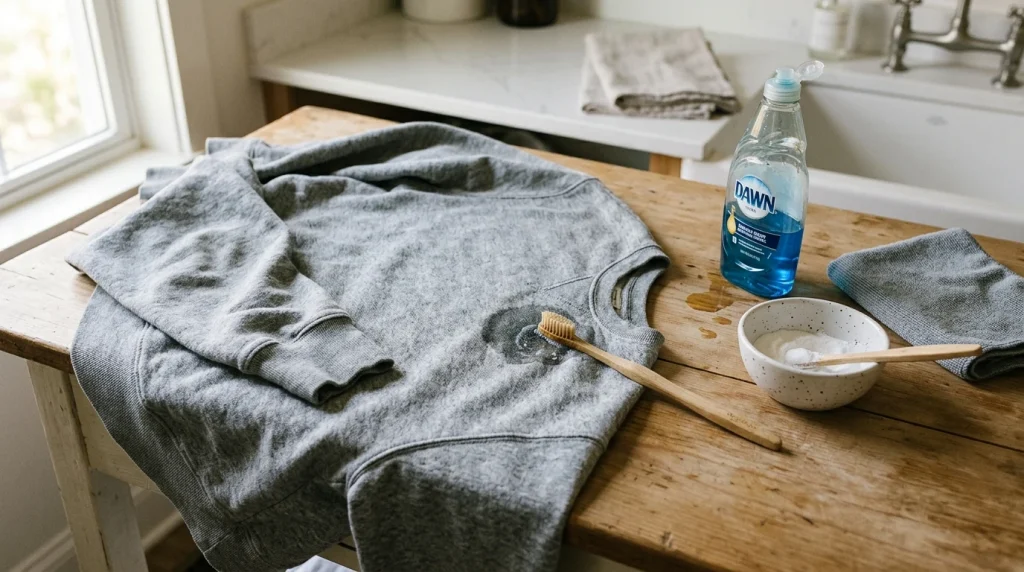
- Apply Absorbent Powder: Cover the entire oily patch with a generous mound of baking soda, cornstarch, or talcum powder (roughly 1/4 inch deep). Lightly pat the powder down onto the spot. Let it sit undisturbed for 15 to 20 minutes. As the starch absorbs the oil, it will clump into gritty granules.
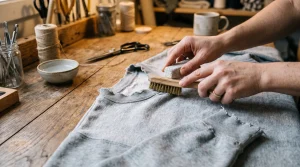
- Brush Away Clumps: Gently brush the saturated powder off the sweatshirt into the sink using an old, soft-bristled toothbrush.
- Work in Surfactant: Squeeze several drops of concentrated grease-cutting dish soap (such as blue Dawn) directly onto the remaining spot. Using the soft toothbrush or your fingertips, massage the soap in small circular motions into the fabric from both the front and reverse sides.
- Warm Water Rinse: Let the dish soap sit for 15 minutes, then rinse the treated spot under warm running tap water (105°F to 115°F / 40°C to 45°C). The surfactant will bind with the oil molecules and wash them out cleanly.
Method 2: Heat-Set Dried Oil Treatment (Re-Liquefy Protocol)
If the sweatshirt was inadvertently tossed into a heated dryer with an unnoticed grease spot, the heat has baked the oil into the polyester fibers. To break this bond, you must first re-emulsify the dried lipid:
- Insert a Cardboard Barrier: Place a clean sheet of cardboard or a plastic cutting board inside the sweatshirt directly beneath the stained area. This prevents solvent and dissolved grease from transferring to the back of the garment.
- Re-Activate with Solvent: Dab a minimal amount of a citrus-based solvent (such as Goo Gone) or a pinpoint spray of WD-40 onto a cotton swab, and press it directly onto the dried oil spot. Let it sit for 10 minutes to dissolve the hardened polymer bonds of the oil.
- Draw Out with Baking Soda: Dust baking soda over the damp solvent spot. Work the baking soda in with a toothbrush until it absorbs the freed oils and solvent. Brush away the residue.
- Wash Out with Dish Detergent: Apply heavy-duty dish soap directly over the remaining shadow. Work it into a dense lather with warm water, letting it rest for 30 minutes before washing.
The Chemistry of Oil Removal: Cotton vs. Polyester Fleece
Understanding fiber structure explains why fleece sweatshirts hold onto grease so tenaciously:
- Cotton Cellulose Fibers: Cotton is naturally hydrophilic (water-loving). It readily absorbs water-based liquids but traps greasy lipids deep within the hollow core of each fiber (the lumen). Surfactants with high hydrophilic-lipophilic balance (HLB) are needed to dislodge oil from the fiber lumen.
- Polyester Synthetic Fibers: Polyester is essentially petroleum-derived plastic. Being hydrophobic and lipophilic (oil-loving), polyester fibers actually form molecular bonds with cooking oils and petroleum greases. This is why 50/50 blend hoodies retain oil stains even after aggressive standard machine laundering.
Color Safety: Avoiding Bleed and “Clean Spots”
Treating dark hoodies (black, navy, burgundy, forest green) requires care to avoid stripping garment dyes or leaving an unsightly halo ring:
| Cleaner Agent | Safety on Colored Sweatshirts | Key Precaution |
|---|---|---|
| Original Blue Dawn | Safe for 99% of colorfast cotton and poly | Rinse thoroughly; do not let dry into raw direct-dyed vintage garments. |
| Baking Soda | Safe; mild abrasive (Mohs hardness 2.5) | Do not scrub aggressively on high-pile fleece to prevent fiber matting. |
| Citrus Solvents (d-Limonene) | Safe for synthetic fleece; risk on screen prints | Spot-test on the inner hem first; keep away from rubberized plastisol inks. |
| Rubbing Alcohol (Isopropyl 70%) | Moderate; dissolves synthetic oils | Can bleed direct acid dyes; use only on cotton/poly heather blends. |
Machine Washing and Crucial Drying Rules
Once pre-treated, launder the garment to remove all surfactant and broken-down oil traces:
- Wash Cycle: Place the sweatshirt in the washing machine using your regular heavy-duty enzyme detergent. Set water temperature to the warmest setting recommended on the garment care label (typically warm for cotton blends).
- Air Dry Only for Verification: Never put the sweatshirt into an electric dryer until you have visually verified in bright daylight that the spot is completely gone. Tumble dryer heat permanently sets any residual micro-film. Hang or lay the sweatshirt flat to air dry. If an outline remains after air drying, repeat the concentrated dish soap treatment.
Frequently Asked Questions
Can white vinegar remove grease stains from a sweatshirt?
Vinegar alone is ineffective at breaking down lipid grease bonds because it is an acid, not a surfactant. However, adding 1/2 cup of distilled white vinegar to the final rinse cycle helps dissolve mineral deposits and residual laundry detergent, leaving fleece fibers softer and fluffier.
What should I do if a grease stain leaves a faint darker shadow after drying?
A faint dark ring indicates that trace grease molecules remain embedded in the polyester weave. Reapply dish soap, rub it gently into the damp fabric, and let it soak overnight in a basin of warm water with heavy-duty liquid laundry detergent before repeating the gentle wash cycle.
Does dry cleaning remove set-in oil stains?
Commercial dry cleaners use perchloroethylene or hydrocarbon solvents that dissolve oils much more effectively than water-based washing. If you are dealing with a rare, expensive vintage hoodie or heavy wool-blend sweater, professional dry cleaning is the safest zero-risk route.
For sweatshirts in sensitive heather blends or light neutral dyes where water rings can form during spot cleaning, consult our dedicated guide on how to get stains out of a grey hoodie. After cleaning, store your freshly laundered sweatshirt correctly by reviewing whether you should hang or fold hoodies.
Get our latest guides, news, and insights highlighted in your Google Search & AI Overviews.