✨ This article was AI edited. Editorial responsibility: CoolestHoodies.com.
Produced with AI. This article was artificially generated. Editorial responsibility: CoolestHoodies.com.
Few garments invite more debate between hygiene standards and fabric preservation than the hooded sweatshirt. Some people wear the same hoodie for weeks without a single wash, while others toss it into the laundry basket after just a few hours of lounging. Finding the definitive answer to how often should you wash hoodies requires balancing microbiological cleanliness against the physical degradation that machine washing inflicts on brushed fleece.
Every trip through a washing machine subjects cotton and synthetic fleece to mechanical abrasion, hot water shrinkage, and chemical detergent stress. Over-washing strips away the soft, cloud-like interior fluff, turning cozy fleece scratchy and thin. Conversely, under-washing allows dead skin cells, body sebum oils, and airborne environmental pollutants to oxidize into stubborn stains and bacteria colonies. Below is the scientific consensus on washing frequency, maintenance between washes, and gentle laundering techniques.
The Golden Rule of Hoodie Washing Frequency
Unlike underwear or t-shirts that maintain direct, continuous contact with high-perspiration skin zones, a hoodie typically functions as an outerwear layer. Your washing frequency should be determined strictly by what is worn underneath and your physical activity level:
| Wear Scenario | Recommended Washing Frequency | Microbiological Rationale |
|---|---|---|
| Layered Over an Undershirt / T-Shirt | Every 5 to 7 wears | The base shirt absorbs armpit sweat and skin oils; the hoodie remains clean from body contact |
| Worn Directly Against Bare Skin | Every 1 to 2 wears | Direct contact transfers sebum, bacteria, and dead skin flakes directly into the fleece interior |
| Gym Workouts / Strenuous Outdoor Labor | After every single wear | Sweat saturates fibers; moisture creates breeding grounds for odor-causing bacteria |
| Exposed to Food Smells, Smoke, or Campfires | Immediately (or spot refresh) | Porous brushed fleece absorbs aromatic volatile organic compounds (VOCs) deeply |
The Science of Fleece: Why Over-Washing Destroys Your Sweatshirt
Understanding fleece textile construction reveals why laundering restraint is essential for garment longevity:
- Interior Loft Degradation: That plush, cloud-like fuzz inside a brand-new sweatshirt is created by mechanically brushing looped French terry knit with fine wire needles. Every washing cycle subjects these delicate raised fibers to hydraulic turbulence and drum friction, causing the brushed fibers to knot into tiny hard balls (pilling) or wash away down the drain as micro-lint.
- Dye Bleeding and Surface Fading: Natural cotton fibers release dye molecules when agitated in warm or hot water. Repeated unnecessary washes turn deep blacks into dusty greys and vibrant jewel tones into dull, washed-out shadows.
- Thermal Shrinkage: Standard cotton fleece shrinks by up to 5% when exposed to warm wash water and high-heat electric tumble drying. The more cycles a hoodie endures, the shorter the sleeves and torso become.
How to Refresh and Extend Wears Between Washes
You do not need to wash a hoodie just because you have worn it four times. Employ these four fabric care strategies to keep your sweatshirt fresh and hygienic without drum friction:
- Hang in Open Air: After wearing your hoodie, hang it on a wide, contoured wooden hanger in a well-ventilated room or near an open window for 2 to 3 hours before putting it back in your closet. Circulating air evaporates trapped body humidity and prevents stale odors.
- The Steamer Sanitize Hack: Running a handheld garment steamer along the interior armpits and collar kills 99.9% of odor-causing bacteria with high-temperature dry steam while relaxing wrinkles—without submerging the fleece in water.
- Vodka / Isopropyl Odor Spray: Mix a 50/50 solution of cheap, unflavored vodka (or 70% isopropyl alcohol) and distilled water in a fine-mist spray bottle. Lightly spritz the underarm and collar linings. As the alcohol evaporates, it breaks bacterial cell walls and eliminates body odor completely without leaving any residual scent.
- Prompt Spot Cleaning: If you drop food on your chest, do not throw the entire hoodie into the wash. Spot-clean the spill immediately following our targeted emergency guide on how to get a stain out of a sweatshirt.
The Master Laundry Protocol: When Wash Day Arrives
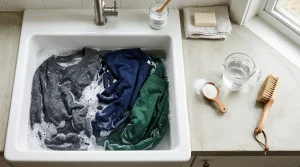
When your hoodie genuinely requires laundering (after 5 to 7 casual wears or when soiled), execute this gentle washing procedure:
| Laundry Step | Best Practice | Crucial Benefit |
|---|---|---|
| 1. Preparation | Zip all zippers fully closed; tie drawstrings in a loose bow; turn hoodie inside out | Protects outer face from friction; prevents zipper teeth from tearing fabric |
| 2. Water Temp | Cold Water Only (Below 85°F / 30°C) | Prevents cotton shrinkage and locks in dye colorfastness |
| 3. Detergent | Mild liquid enzyme detergent (Zero powder residue) | Dissolves cleanly without leaving chalky mineral deposits on fleece loops |
| 4. Softener Rule | FORBIDDEN: No Liquid Fabric Softener (Use 1/2 cup white vinegar instead) | Softener coats fibers in water-repellent wax; vinegar strips detergent buildup |
| 5. Drying Method | Air Dry Flat or Tumble Dry on Low Heat (15 min) + Air Finish | Prevents high heat from scorching synthetic fibers or shrinking cotton |
Frequently Asked Questions
Can you wash hoodies with jeans and towels?
Never wash soft hoodies with rough heavy fabrics like denim jeans, zippered jackets, or abrasive bath towels. The heavy denim hardware scratches and abrades the fleece surface, while towels shed thousands of cotton loops that cling to fleece like lint magnets. Always wash hoodies with similar soft knits and athletic apparel.
How do I know when my hoodie truly needs a wash?
Follow the “Sniff, Spot, and Stiff” test: if the armpits fail a neutral sniff test, if there are visible food or dirt stains, or if the collar and cuffs feel stiff with body oil, it is time for a proper machine wash.
What should I do if my hoodie smells musty after washing?
A musty smell indicates detergent residue or mildew from taking too long to dry. Re-wash the hoodie with 1 cup of distilled white vinegar (no detergent) on a warm cycle, then dry thoroughly in a breezy environment or with a fan.
Protecting Your Sweatshirt Collection
Adopting mindful laundry habits extends the lifespan of your favorite hoodies by years while preserving that luxurious, brand-new fleece softness. If you encounter deep, washed-in collar rings or multiple spots, review our restorative soaking guide on how to get stains out of a sweatshirt. Once laundered and dried, protect your sweatshirts from hanger marks and neckline stretching by exploring whether you should hang or fold hoodies.
Get our latest guides, news, and insights highlighted in your Google Search & AI Overviews.