✨ This article was AI edited. Editorial responsibility: CoolestHoodies.com.
Produced with AI. This article was artificially generated. Editorial responsibility: CoolestHoodies.com.
Spilling dark coffee, tomato sauce, or red wine on a prized fleece sweatshirt triggers immediate panic. Cotton-polyester fleece is exceptionally porous: its looped knit construction and brushed interior fibers absorb liquid rapidly, drawing pigments deep into the yarn core. Knowing how to get a stain out of a sweatshirt quickly—using targeted chemistry calibrated to the specific substance—is the difference between saving your favorite hoodie and permanently ruining it.
Standard home laundry mistakes, such as vigorously scrubbing the fabric with hot tap water, actually force stains deeper and abrade delicate fleece fibers into a matted, fuzzy halo. Below is the definitive emergency triage guide to identifying, treating, and washing out every major category of sweatshirt stain safely.
Emergency Action Protocol: The Golden Rules
Before grabbing any cleaning product, memorize these three mandatory rules of fleece stain triage:
- Blot, Never Scrub: Scrubbing back and forth pushes stain particles across undamaged adjacent fibers and permanently damages the brushed knit surface. Press folded white paper towels or clean microfiber cloths firmly against the spot to draw liquid straight up.
- Always Flush from the Reverse Side: Hold the sweatshirt inside out and run water through the back of the fabric to push the stain out the front. Rinsing directly from the front forces the stain deeper into the internal fleece loops.
- Zero Dryer Heat Until 100% Verified: Never place a treated sweatshirt into an electric tumble dryer until the garment has air-dried in bright daylight and you have verified zero residual discoloration. Tumble dryer heat bakes pigment into synthetic polyester and cellulose permanently.
Stain Classification Matrix: Match the Chemical Agent
Different compounds require opposite chemical mechanisms to dissolve:
| Stain Category | Common Examples | Primary Chemical Agent | Water Temperature Rule |
|---|---|---|---|
| Tannin & Acidic | Black coffee, black tea, red wine, berries, soda | White distilled vinegar + Liquid dish soap | Warm water (100°F / 38°C) |
| Protein & Organic | Blood, dairy, eggs, sweat, vomit | Enzyme detergent or hydrogen peroxide | Strictly Cold Water (Hot water cooks proteins) |
| Lipid & Grease | Cooking oil, butter, bacon grease, mayonnaise | Baking soda powder + Blue Dawn dish soap | Warm to hot water (per fabric care tag) |
| Dye & Pigment | Tomato sauce, mustard, curry, grass, ink | Sodium percarbonate (Oxygen bleach) + Alcohol | Tepid to warm water |
Method 1: Treating Tannin Stains (Coffee, Tea, Wine)
Tannins are plant-based polyphenols that bind quickly to cellulose cotton fibers:
- Blot excess liquid immediately with a dry cloth.
- Mix a solution of 1 tablespoon white distilled vinegar, 1 tablespoon liquid dish soap, and 2 cups of warm water.
- Sponge the mixture onto the stain using a clean sponge or cloth. The mild acetic acid in vinegar dissolves the tannin structure without bleaching dyed fleece.
- Let dwell for 15 minutes, then flush thoroughly from the reverse side with warm running tap water.
Method 2: Treating Protein Stains (Blood, Sweat, Dairy)
Proteins coagulate (cook) when exposed to heat, bonding permanently to synthetic fibers:
- Rinse immediately under a forceful stream of cold running water from the reverse side.
- Pour a concentrated liquid enzyme laundry detergent (containing protease enzymes) directly onto the damp spot.
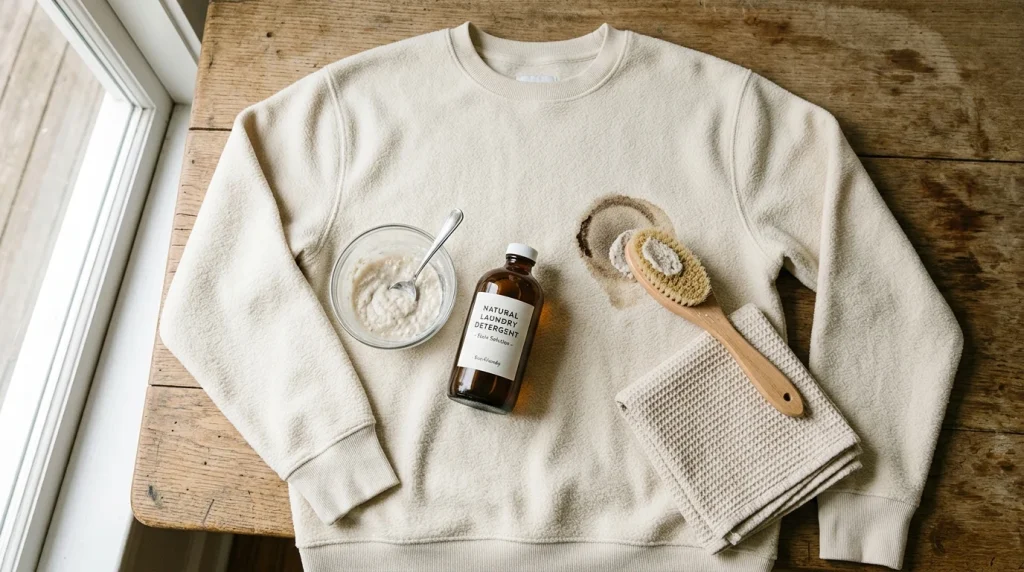
- Work the detergent gently into the fleece loops using your thumbs or a soft-bristled toothbrush.
- Let the enzyme solution rest for 30 minutes. The protease enzymes biologically break peptide bonds, dissolving the organic matter.
- Wash in the washing machine on a cold water cycle.
Method 3: Pigment and Sauce Stains (Tomato, Mustard, Grass)
Bright sauces combine greasy lipid bases with intense natural colorants (lycopene in tomatoes, curcumin in mustard):
- Gently scrape off solid crust with a butter knife or spoon. Do not use paper towels, which push sauce into the knit.
- Apply a small dollop of concentrated grease-cutting dish soap directly over the spot to dissolve the oily binder. Rinse with warm water.
- To eliminate the lingering yellow or orange pigment, create a paste of sodium percarbonate (OxiClean) and warm water. Coat the stain and let it soak for 1 to 2 hours. Oxygen bleach oxidizes dye chromophores without degrading garment dyes.
- Launder on a normal cycle.
Protecting Delicate Heather and Vintage Dye Blends
Heavily dyed streetwear sweatshirts require extra precaution to avoid leaving an unsightly faded ring or bleach spot:
| Treatment Chemical | Colorfastness Rating | Precaution on Colored Sweatshirts |
|---|---|---|
| 3% Hydrogen Peroxide | Safe for whites & light heather; Caution on darks | Always spot-test inside the lower hem for 5 minutes first to check for dye lift. |
| Chlorine Bleach | FORBIDDEN on fleece sweatshirts | Eats synthetic polyester fibers, turns cotton yellow, destroys fleece loft. |
| Oxygen Bleach (Color-Safe) | Safe for 99% of washable fabrics | Activates best in warm water; safe for multi-hour overnight soaking. |
| Rubbing Alcohol (70% Isopropyl) | Excellent for ink; moderate on dyes | Dab gently; do not soak entire panels on direct-dyed vintage fleece. |
Frequently Asked Questions
Can I get an old, dried stain out of a sweatshirt?
Yes. Re-hydrate the dried stain by soaking the sweatshirt in a basin of warm water with 1 scoop of oxygen bleach powder and 2 tablespoons of liquid enzyme detergent for 4 to 8 hours. The prolonged hydration softens the baked-on residue, allowing surfactants to penetrate deep into fiber cores.
What is the best way to remove grease from a fleece sweatshirt?
Grease requires a two-step absorbent and surfactant protocol: dust the fresh spot with baking soda to draw out surface lipids, brush away the clumps, and massage concentrated blue dish soap into the remaining mark. For our complete step-by-step chemical walkthrough, see our dedicated guide on how to get grease out of a sweatshirt.
Why did a stain leave a yellow ring after washing?
A yellow ring is caused by residual surfactant detergent or hard water minerals reacting with body sebum oils. Soak the garment in a solution of 1/2 cup white vinegar per gallon of warm water for 30 minutes, then rinse cleanly without detergent.
Long-Term Fabric Care and Preservation
Acting decisively with the correct chemical mechanism ensures that an accidental spill does not end your favorite sweatshirt’s lifespan. If you are cleaning delicate light grey fabrics prone to water rings, review our specific instructions on how to get stains out of a grey hoodie. After cleaning and air-drying, maintain crisp garment structure by consulting whether you should hang or fold hoodies.
Get our latest guides, news, and insights highlighted in your Google Search & AI Overviews.