✨ This article was AI edited. Editorial responsibility: CoolestHoodies.com.
Produced with AI. This article was artificially generated. Editorial responsibility: CoolestHoodies.com.
Should I wear a sweater tomorrow? You should wear a sweater tomorrow if temperatures fall between 55°F and 65°F (13°C to 18°C), if wind gusts exceed 15 mph, or if your indoor environment features aggressive air conditioning. Below 50°F (10°C), pair your sweater with an outer jacket for thermal insulation.
The Morning Dilemma: Navigating Transitional Weather with Confidence
Checking the weather forecast the night before is an everyday ritual, yet deciding whether to reach for a sweater remains one of the most deceptively complex sartorial decisions. An ambient temperature reading on a smartphone app tells only part of the story. A forecast of 62°F feels crisp and refreshing in sunny, windless conditions, but that exact same 62°F feels biting and clammy when accompanied by 20 mph wind gusts and 85% relative humidity.
Furthermore, human thermal comfort is heavily influenced by dynamic diurnal temperature swings. In spring and autumn, morning commute temperatures can hover near 48°F, only for the afternoon sun to push the mercury above 70°F before dropping sharply again at sunset. Add indoor microclimates—such as over-air-conditioned office cubicles, crowded subway cars, and heated coffee shops—and choosing the wrong knitwear can leave you either shivering or overheating uncontrollably.
This comprehensive meteorological and textile guide breaks down exact temperature thresholds, atmospheric variables, and fiber selections so you always make the right clothing choice.
The Definitive Temperature & Knitwear Matrix
Use this calibrated temperature guide to determine what knitwear layer you need tomorrow based on expected outdoor high and low temperatures:
| Forecast Temperature Range | Sweater Verdict | Recommended Knitwear Type | Layering Strategy |
|---|---|---|---|
| Above 75°F (24°C+) | No (Too Warm) | None / Lightweight Linen Shirt | Sweater strictly unnecessary outdoors; carry a light cardigan only if office AC is freezing |
| 66°F to 74°F (19°C–23°C) | Optional / Evening Only | Ultra-Fine Gauge Cotton or Silk-Knit | Tee or polo during peak daylight; drape a light crewneck over shoulders for evening cool |
| 55°F to 65°F (13°C–18°C) | Yes (The Ideal Sweater Zone) | Midweight Cotton French Terry or Merino Wool | Standalone outerwear over a t-shirt or collared button-down; optimal thermal balance |
| 45°F to 54°F (7°C–12°C) | Yes (Mandatory Knitwear) | Heavyweight Wool, Cashmere, or Cable-Knit | Pair sweater with a windbreaker, trench coat, or light denim jacket |
| Below 45°F (Under 7°C) | Yes (Insulating Mid-Layer) | Dense Fisherman Cable-Knit or Chunky Turtleneck | Heavy sweater worn as intermediate thermal barrier beneath a wool overcoat or down parka |
The 4 Environmental Variables Beyond Temperature
Relying solely on thermometer readings leads to poor outfit choices. Always adjust your decision against these four critical atmospheric and situational factors:
1. Wind Speed and Wind Chill Factor
Air is an effective natural insulator when trapped against your skin. However, ambient wind strips away this micro-layer of body heat through convective cooling. If tomorrow’s forecast predicts sustained winds or gusts exceeding 15 mph, the “feels-like” temperature will drop by 5°F to 10°F. If you wear an open-gauge or loose-knit sweater on a windy day, the wind will slice directly through the yarn loops. For windy conditions, choose a tightly woven dense merino wool knit or layer a windproof shell over your sweater.
2. Cloud Cover and Solar Radiation
Direct sunlight provides radiant heat that significantly warms human skin and clothing fibers independently of air temperature. A clear, sunny 58°F day often feels comfortable in a lightweight pullover. In contrast, an overcast, leaden sky offering zero direct solar gain will make 58°F feel chilly and damp, warranting a heavier wool or cashmere knit.
3. Diurnal Temperature Fluctuations (The 20-Degree Rule)
If tomorrow’s low is 45°F and the afternoon high is 68°F, do not commit to a heavy, non-removable pullover. Instead, adopt an Open-Front Layering System: wear a lightweight crewneck t-shirt beneath a zip-up hoodie, cardigan, or quarter-zip sweater. This allows you to vent heat effortlessly as the day warms up and zip closed when the temperature dips in the evening.
4. The Office & Indoor AC Microclimate
Many modern corporate offices, university lecture halls, and retail stores maintain hyper-aggressive commercial air conditioning set to 66°F to 68°F throughout the spring and summer. Even if tomorrow’s outdoor forecast calls for 80°F heat, bringing a versatile fine-gauge merino cardigan or cotton sweater to keep at your desk prevents hours of shivering under cold vent drafts.
Choosing the Right Sweater Fabric for Tomorrow
Not all sweaters provide the same thermal characteristics. Selecting the proper fiber matches your garment’s breathability to tomorrow’s atmospheric conditions:
- Merino Wool: The most versatile all-weather natural fiber. Merino fibers feature microscopic crimps that trap air when you are cold, while naturally wicking away moisture vapor when your body temperature rises. It is odor-resistant, temperature-regulating, and comfortable across a massive range (45°F to 65°F).
- 100% Breathable Cotton: Excellent for mild transitional weather (60°F to 68°F). Cotton breathes exceptionally well and is gentle on sensitive skin. However, it lacks wind resistance and provides zero thermal insulation if damp.
- Cashmere: Spun from the fine undercoat of cashmere goats, this luxury fiber provides three times more thermal insulation per ounce than standard sheep wool while remaining feather-light. Ideal for crisp, dry cold days (40°F to 55°F).
- Chunky Shetland / Lambswool: Stiff, coarse, and highly resilient. Excellent for standalone outerwear in blustery, cold autumn weather (45°F to 55°F).
Commuting Checklist: The 10-Second Morning Decision
Tomorrow morning before walking out your front door, perform this rapid three-point assessment:
- Step Outside for 15 Seconds: Before dressing, step onto your balcony, porch, or open a window. Feel the actual air movement and humidity on your bare arms.
- Assess Your Transit Mode: Will you be sitting in a climate-controlled automobile for 40 minutes, or waiting 15 minutes on an exposed, breezy commuter train platform? Walkers and public transit riders require significantly more wind-blocking thermal protection.
- Verify the Afternoon Forecast: If the temperature will increase by more than 15 degrees while you are away from home, choose a button-front cardigan or quarter-zip that can be unbuttoned, draped over your shoulders, or packed neatly into a tote bag.
Frequently Asked Questions About Weather and Sweaters
At what temperature is it too hot to wear a sweater?
For most people, temperatures exceeding 72°F (22°C) under active sunlight are too warm for knitwear, causing perspiration and discomfort unless wearing ultra-breathable open-weave linen blends.
Can you wear a sweater if it is raining tomorrow?
Only if worn beneath a waterproof raincoat or umbrella. Untreated wool absorbs up to 30% of its weight in water before feeling wet, but once saturated, it becomes heavy, stretches out of shape, and emits a damp sheep smell. Cotton sweaters become soaked instantly and pull heat away from your body.
Is a sweater warmer than a hoodie?
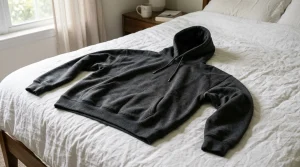
Weight for weight, a dense 100% wool or cashmere sweater provides superior thermal insulation compared to a standard cotton hoodie because wool fibers trap significantly more dead air pockets. However, hoodies offer superior head and neck wind protection via the attached hood.
Get our latest guides, news, and insights highlighted in your Google Search & AI Overviews.