✨ This article was AI edited. Editorial responsibility: CoolestHoodies.com.
Produced with AI. This article was artificially generated. Editorial responsibility: CoolestHoodies.com.
Sweatshirt online shopping requires evaluating three key specifications before checkout: fabric density (GSM), garment measurements (pit-to-pit chest width and back length), and fiber composition (100% cotton versus poly-blends). Checking size charts against your best-fitting sweatshirt prevents sizing errors and returns.
The Modern Sweatshirt Market: Why Online Shopping Can Be Deceptive
Buying sweatshirts and hoodies online has become the dominant method for acquiring both daily casual wear and collectible luxury streetwear. However, e-commerce garment purchasing presents inherent hurdles: you cannot physically touch the fleece lining to evaluate softness, drape the garment over your shoulders to assess silhouette volume, or test the rigidity of the collar ribbing.
Compounding this challenge is the complete lack of global standardization in apparel sizing. A size “Medium” from a European minimalist label might measure 20 inches across the chest, while an American workwear brand’s “Medium” spans 23.5 inches, and an Asian streetwear label’s “Medium” fits like an American Extra Small. Relying solely on generic alpha sizing (S, M, L, XL) is the number one cause of buyer dissatisfaction, garment returns, and return shipping fees.
By learning how to read technical garment specifications, decrypt fiber content labels, and measure your own clothing accurately, you can navigate online shopping with absolute confidence.
Decoding Silhouettes and Fits Before You Add to Cart
Modern sweatshirts come in distinct architectural cuts. Identifying which silhouette matches your body proportions and styling intent is the foundational step in shopping online:
| Fit Category | Key Proportions | Shoulder Seam Placement | Recommended Styling Purpose |
|---|---|---|---|
| Classic / Regular Fit | Straight torso, 2″–3″ ease over body | Sits directly on the acromion bone | Office business casual, standard layering under jackets |
| Boxy / Cropped Fit | Wide chest, shortened body length | Dropped 2″–3″ down the bicep | Modern streetwear, high-waisted trousers, athletic builds |
| Oversized / Slouchy Fit | Generous chest, elongated sleeves, wide hem | Dropped heavily past shoulders | Cozy loungewear, skate aesthetics, cold-weather comfort |
| Slim / Athletic Fit | Tapered waist, snug through forearms | High armhole, tailored shoulder | Gym warmups, running, wearing under trim overcoats |
Fabric Composition and Weight: The GSM Matrix
Never purchase a sweatshirt from an online store that fails to disclose fabric composition and material weight. Product photography can easily make a flimsy 200 GSM poly-fleece look as substantial as a 450 GSM heavyweight cotton garment through creative back-clipping and studio lighting.
1. Fiber Composition: Cotton vs. Polyester vs. Blends
- 100% Ring-Spun Combed Cotton: The gold standard for breathability, tactile comfort, and skin-friendly softness. 100% cotton develops a beautiful vintage patina over years of wear and does not trap biological body odor like synthetic fibers. However, it is susceptible to shrinkage if laundered improperly in hot water.
- 80/20 or 70/30 Cotton-Polyester Blend: The workhorse industry standard. Adding 20% to 30% polyester into the interior core improves structural durability, prevents excessive wash shrinkage, accelerates drying times, and provides wrinkle resistance while maintaining a soft cotton exterior face.
- 100% Polyester Fleece: Common in budget clothing and technical outdoor gear. While lightweight and moisture-resistant, pure polyester pills easily, builds up static electricity, and retains body sweat odors over repeated wears.
2. The GSM Quality Scale
GSM stands for grams per square meter. It is the definitive metric of fabric thickness and heft:
- Under 250 GSM: Ultra-lightweight. Best for summer mornings or active sportswear. Feels more like a heavy long-sleeve tee than a true sweatshirt.
- 280–350 GSM: Midweight. The versatile year-round sweet spot used by major casual brands (Champion Powerblend, Gildan Heavy Blend, standard retail fashion).
- 380–450 GSM: Heavyweight. Thick, structured, and warm. Characteristic of premium streetwear (Supreme, Aimé Leon Dore, Reigning Champ). Holds an architectural shape.
- 500+ GSM: Super-heavyweight. Extremely dense, stiff out of the box, and durable enough to replace a spring jacket.
The Flat Measurement Method: Never Buy the Wrong Size Again
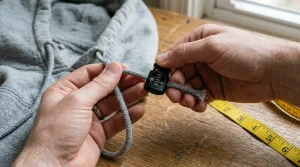
The secret weapon of seasoned online apparel shoppers is the Garment-to-Garment Flat Measurement Method. Instead of measuring your own body with a flexible tape, measure your favorite existing sweatshirt that already fits you perfectly:
- Chest Width (Pit-to-Pit): Lay your favorite sweatshirt flat on a table. Measure straight across the chest from the lower armpit seam on one side to the lower armpit seam on the other side. Double this number for your total chest circumference.
- Back Length: Measure from the center of the rear collar seam (where the collar joins the back panel) straight down to the bottom edge of the waistband ribbing.
- Shoulder Span: Measure horizontally from the top seam of the left shoulder directly across to the top seam of the right shoulder.
- Sleeve Length: Measure from the center back of the neck (or the shoulder seam, depending on how the online size chart is structured) down to the edge of the wrist cuff.
When browsing an online product page, ignore the generic “S/M/L” recommendation widgets and navigate directly to the detailed “Garment Measurements” or “Size Chart” tab. Compare the store’s numbers against your flat measurements. If the online chest measurement matches within 0.5 to 1 inch of your favorite sweatshirt, the fit will be spot on.
Spotting Low-Quality Dropshipping Traps Online
Social media feeds and search engines are flooded with fly-by-night clothing sites advertising gorgeous graphic sweatshirts that turn out to be cheap, shiny polyester knockoffs upon delivery. Look for these red flags before entering your credit card details:
- Computer-Generated Mockups Only: If every product image shows identical model poses with graphic designs artificially photoshopped onto the fabric, the brand holds zero inventory and is dropshipping print-on-demand items.
- Vague Fabric Descriptions: Listings that state “Cotton Blend” or “Soft Fleece” without specifying the exact fiber percentages (e.g., 80% Cotton / 20% Polyester) or GSM weight are deliberately concealing low-grade synthetic textiles.
- Unrealistic Shipping Windows: Delivery windows quoted as “14 to 28 business days” indicate the item is being dispatched directly from overseas manufacturing hubs without domestic quality inspection.
- No Physical Return Address: Legitimate apparel retailers provide clear domestic return addresses and transparent exchange policies. Avoid stores whose return policy requires customers to ship returns internationally at their own expense.
Frequently Asked Questions About Buying Sweatshirts Online
How much should I expect a quality sweatshirt to shrink after washing?
Pre-shrunk cotton-polyester blends typically shrink less than 3% in length and width when washed in cold water. In contrast, 100% unwashed raw cotton garments can shrink between 5% and 8% in body length after their first hot wash and tumble dry cycle. If buying 100% raw cotton and you plan to machine dry, consider sizing up one size.
What is the difference between French terry and fleece in online descriptions?
Both are circular knit fabrics, but their interior surfaces differ. French terry features unbrushed yarn loops on the inside, providing smooth, moisture-absorbing comfort ideal for warm weather and athletic use. Fleece has its interior loops mechanically brushed into a fluffy, fuzzy nap that traps body heat for superior cold-weather insulation.
Are expensive heavyweight sweatshirts worth the premium price?
High-GSM cotton sweatshirts (380+ GSM) from reputable heritage manufacturers utilize reverse-weave construction (fabric cut crosswise to prevent vertical shrinking), reinforced flatlock stitching, and 100% combed cotton. While they cost more upfront, they retain their shape, color, and structural integrity across 5 to 10 years of weekly wear, dramatically outlasting cheap fast-fashion alternatives.
Get our latest guides, news, and insights highlighted in your Google Search & AI Overviews.