✨ This article was AI edited. Editorial responsibility: CoolestHoodies.com.
Produced with AI. This article was artificially generated. Editorial responsibility: CoolestHoodies.com.
All-over-print (AOP) graphic hoodies—frequently marketed across social media ads as “3D Hoodies”—feature eye-catching, photorealistic graphics covering every square inch of the fabric, from galaxy space nebulae and psychedelic artwork to anime battle scenes and medieval armor motifs. However, the 3D hoodie market is notoriously plagued by deceptive online storefronts, digital mockup bait-and-switches, and unfulfilled deliveries.
If you recently saw a jaw-dropping hoodie on an Instagram or TikTok ad and wondered, “Is this site legit?”, you need objective criteria to distinguish between reputable print-on-demand apparel houses and fly-by-night drop-shipping scams. Below is the forensic guide to evaluating 3D hoodie authenticity, manufacturing quality, and transaction safety.
1. The 3D Mockup Reality Check: Digital Renders vs. Real Products
The number one hallmark of a questionable 3D hoodie merchant is relying 100% on 3D computer-generated digital mockups without showing a single physical garment photographed in real life.
- Digital Render Deception: Scammers download flat digital wallpaper graphics, map them over a generic 3D sweater wireframe using automated software, and publish hundreds of listings in minutes. In these digital mockups, colors appear hyper-luminous, shadows are mathematically perfect, and the graphic flows seamlessly across seams without interruption.
- The Physical Reality: In real apparel manufacturing, printing an all-over design requires cut-and-sew dye sublimation. When panels are sewn together, graphics rarely align with 100% mathematical perfection at the armpit or kangaroo pocket. If a storefront does not display customer photos, close-up seam video, or photos of models actually wearing the physical hoodie, the site is almost certainly a drop-ship middleman.
2. Fabric Truth: Why 3D Hoodies Are NEVER 100% Cotton
If a website claims their all-over photorealistic 3D hoodie is “100% heavy organic cotton”, they are being outright dishonest. Here is why the laws of textile chemistry make this impossible:
| Printing Technology | Compatible Fiber | Graphic Capability | Breathability & Feel |
|---|---|---|---|
| Dye Sublimation (True 3D All-Over) | 100% Polyester or Poly/Spandex blend | Photorealistic, edge-to-edge, never cracks or peels | Silky outer shell, brushed fleece interior, synthetic breathability |
| Direct-to-Garment (DTG) | 100% Cotton or Cotton-rich blends | Vivid chest prints, limited to rectangular printable zones | Natural cotton softness, breathable, cannot cover entire seams |
| Screen Printing | All fabric types | Bold solid vector colors, ink sits on top of fabric | Heavy ink hand-feel, prone to cracking over multiple wash cycles |
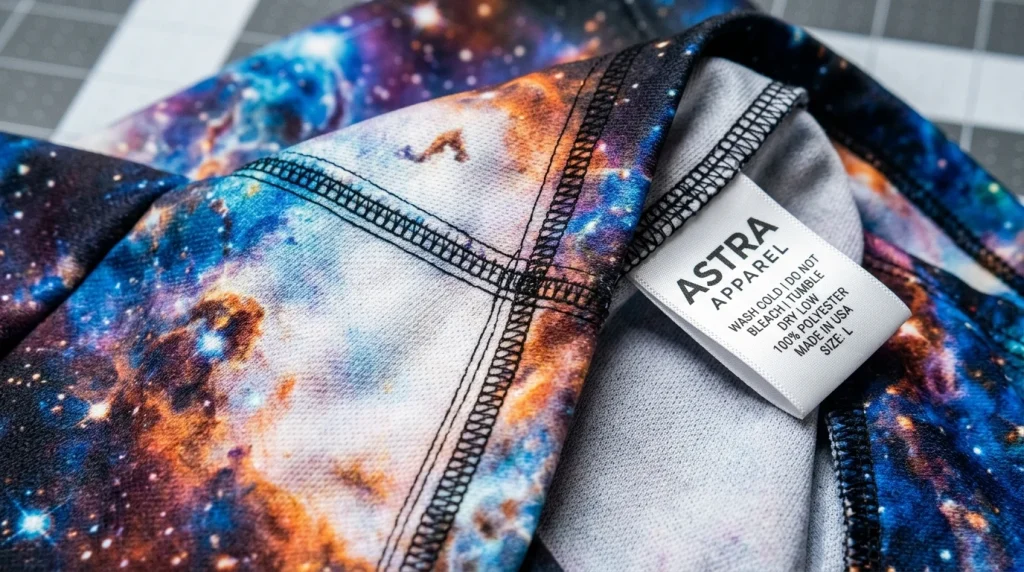
Sublimation inks require synthetic polymer molecules (polyester) to gaseous-bond under high heat (400°F). Cotton cellulose fibers do not accept sublimation dyes. A legitimate 3D hoodie will honestly state: “Fabric: 95% polyester, 5% spandex with brushed fleece lining”. High-grade polyester fleece feels soft, lightweight, and warm; cheap low-grade polyester feels slick and scratchy like a plastic shower curtain.
3. Forensic Scam Checklist: 7 Red Flags to Audit
Before entering payment information on any 3D hoodie website, run this quick forensic audit:
| Audit Check | Legitimate Manufacturer | Suspect / Scam Storefront |
|---|---|---|
| Domain Age (WHOIS) | Registered 2+ years ago; public corporate owner | Registered within the last 30 to 90 days; hidden registrar |
| Physical Contact Address | Verifiable commercial facility or registered office | No address, or a residential house / empty parcel locker |
| Payment Gateways | PayPal, Apple Pay, standard verified Stripe processor | Wire transfer only, cryptocurrency, or obscure third-party processors |
| Customer Reviews | Independent reviews on Trustpilot, Reddit, Google Maps | Only on-site reviews with generic stock avatar photos |
| Copyright Compliance | Original artwork or licensed pop culture collaborations | Stolen Marvel, anime, or video game graphics sold without license |
| Estimated Delivery | Clear production window (3–5 days) + shipping (3–7 days) | “Allow 4 to 8 weeks for standard shipping” (ePacket drop-shipping) |
| Return Processing | Domestic return address with RMA tracking | Customer must mail back to a factory in Shenzhen at own cost |
4. Seam Alignment: How to Judge Garment Construction
When an authentic 3D hoodie arrives, the ultimate test of craftsmanship is pattern matching at the seams:
- Kangaroo Pocket Continuity: On premium cut-and-sew hoodies (such as those from Electro Threads or Into the AM), the graphic printed across the front pouch continues seamlessly into the chest behind it. On low-tier budget blanks, the pocket graphic is offset by several inches, cutting faces or landscapes in half.
- Shoulder and Hood Joinery: Look at where the hood joins the collar. High-end sublimation printers design the digital cutting template so hood designs complement the back panel rather than colliding awkwardly.
- Internal Lining Softness: Legitimate 3D hoodies feature a soft, double-brushed micro-fleece interior that feels plush against skin. Counterfeits use a thin, unbrushed synthetic mesh that traps perspiration and generates uncomfortable friction.
5. What to Do If You Were Charged by a Fake Storefront
If you ordered from a fraudulent 3D hoodie site that provided fake tracking numbers or never delivered your purchase:
- File an Immediate Dispute: If you paid via PayPal, open a dispute under “Item Not Received” or “Significantly Not As Described”. Provide screenshots of the digital mockup compared to the low-quality item received.
- Credit Card Chargeback: Contact your bank’s fraud department. Report the transaction under Fair Credit Billing Act protections. Provide order confirmation emails and evidence of unanswered merchant inquiries.
- Report to Consumer Protection Agencies: File an e-commerce scam report with the Federal Trade Commission (FTC) at ReportFraud.ftc.gov and the Better Business Bureau (BBB).
Frequently Asked Questions
Are there legitimate, trustworthy 3D hoodie brands?
Yes. Brands such as Into the AM, Electro Threads, and RageOn are established US-based apparel companies that specialize in legitimate cut-and-sew all-over sublimation prints. They manufacture their garments with premium polyester fleece, employ in-house graphic artists, and offer domestic returns.
Can you wash a 3D sublimated hoodie in hot water?
No. While sublimation dyes do not bleed or crack like traditional screen prints, high heat can melt or permanently distort synthetic polyester fibers. Always wash your 3D hoodie in cold water on a gentle cycle, and hang dry or tumble dry on ultra-low heat.
Why are high-quality 3D hoodies priced at $60 to $90?
True cut-and-sew sublimation requires individual fabric panels to be printed before garment assembly, followed by hand-guided sewing to align graphics. This labor-intensive process costs significantly more than mass-printing 500 blanks simultaneously on a rotary screen printer.
Ensuring Garment Longevity
When investing in specialty graphic apparel, protecting your purchase starts with safe checkout habits and proper post-wash garment care. To compare trusted e-commerce buying protocols, check out our comprehensive guide on how to buy sweatshirts online, and preserve fabric elasticity over the long term by reviewing whether you should hang or fold hoodies.
Get our latest guides, news, and insights highlighted in your Google Search & AI Overviews.